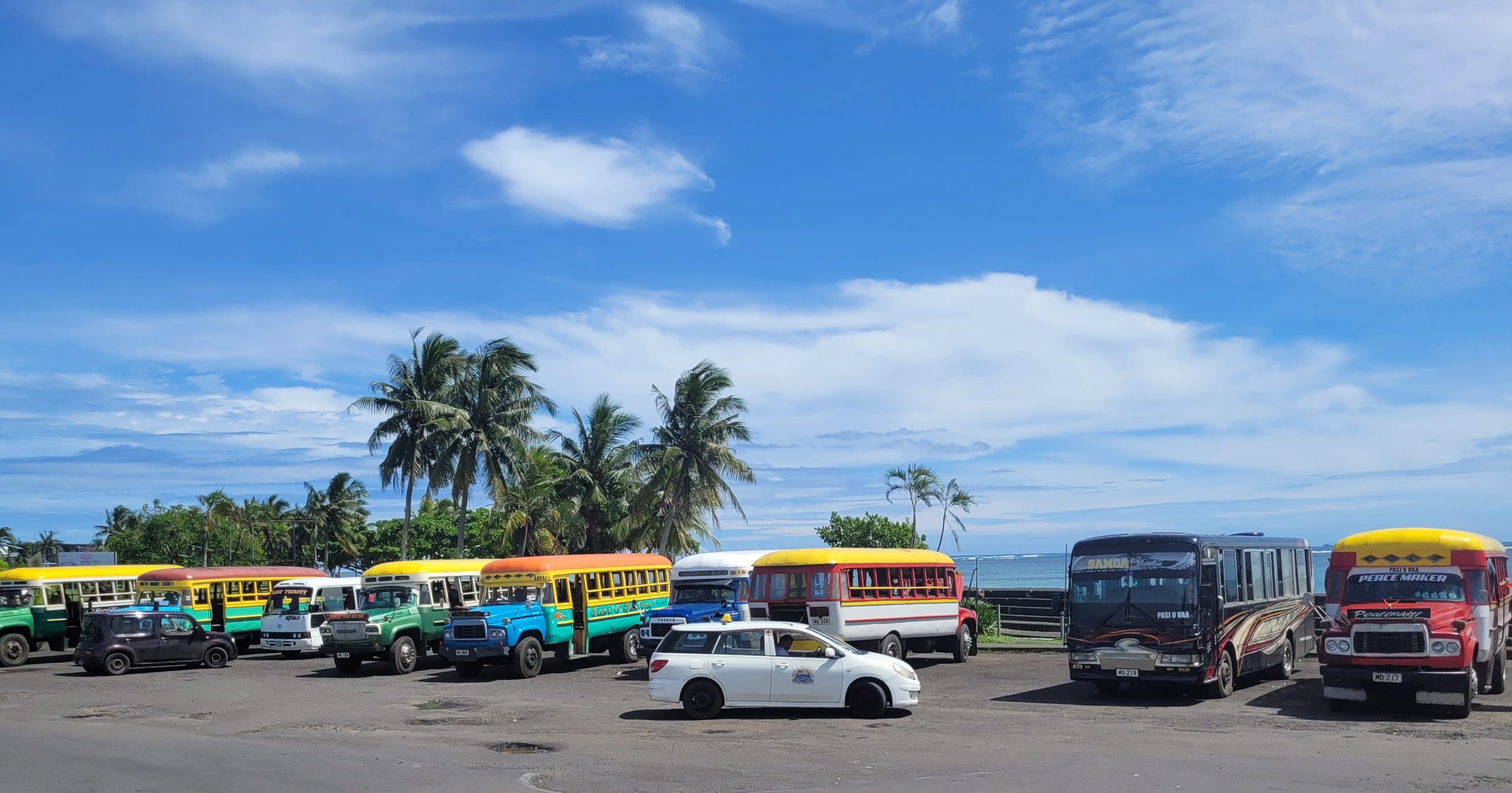
Flow led the transport inputs in this United Nations sponsored project to develop a comprehensive strategy to reduce the carbon emissions of the transport sector in Samoa by 20% over the next 5 years.
The project included reviewing and updating Samoa’s legislative and policy framework in support of a national transition to low-carbon land and maritime transport, conducting a transport optimisation and energy efficiency review, and developing a gender-sensitive Sustainable Land Use and Mobility Plan.
To quantify the existing carbon emissions of the different elements of the transport fleet and test the effectiveness of different intervention options, we developed the Samoa Transport Emissions Model (STEM), which models the emissions of every vehicle in the Samoan fleet.
Working with the United Nations Development Programme, in close collaboration with the Samoan Ministry of Works, Transport and Infrastructure and many other Government departments, we developed a multifaceted strategy that includes not only transitioning targeted segments of the vehicle fleet to zero and low emission vehicles, but also improved bus services and infrastructure, walking and cycling enhancements, improved land use planning and shared mobility including e-bikes and e-minibuses for villages. Alongside these are essential capacity and capability enhancements, including developing and resourcing an electric vehicle maintenance course for local students and targeted public awareness campaigns.
The Prime Minister officially launched the Transport Decarbonisation Strategy and the Sustainable Land Use and Mobility Plan on 8th April 2025.